
Hollywood’s pool of potential mega-mergers is shrinking, pushing dealmakers toward a more fragmented corner of the business: creators, intellectual property and smaller entertainment companies that can be scaled into larger businesses.
Raine partner Erik Hodge said Wednesday that his firm is increasingly focused on IP and the migration of established Hollywood talent onto platforms like YouTube, where creators can build sizable audiences without the infrastructure once provided by a traditional studio or network.
“There’s a lot of opportunity around the migration of traditional talent, traditional content, onto YouTube,” Hodge said at TheWrap’s TheGrill conference.
Rather than signaling a slowdown in dealmaking, the shift could redirect investment toward individual pieces of IP, creator businesses and independent production companies. These deals could spawn in the shadow of mega-mergers like Paramount’s $110 billion acquisition of Warner Bros. Discovery to Fox’s $22 billion purchase of Roku, of which the panelists believe there will be fewer of going forward.
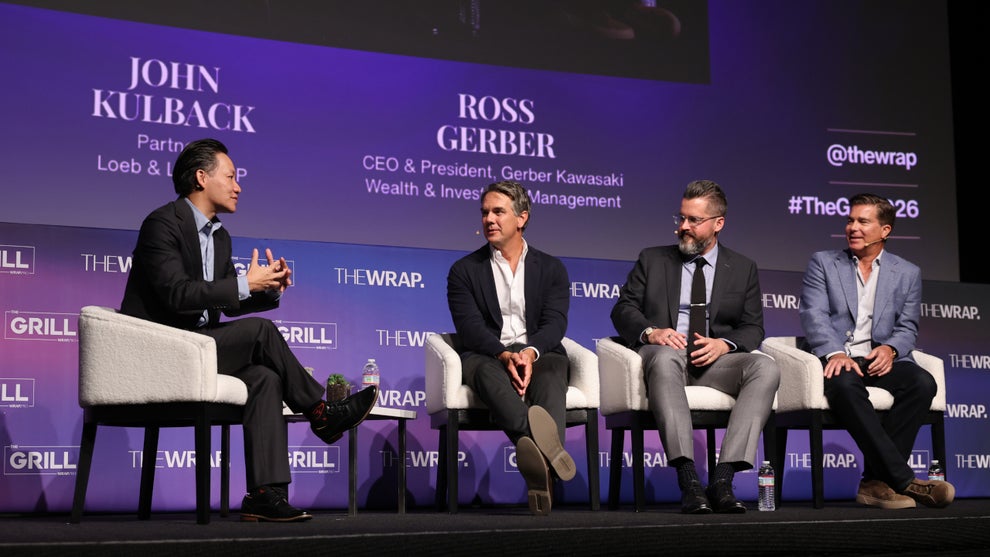
Hodge, Loeb & Loeb partner John Kulback and Gerber Kawasaki CEO Ross Gerber joined TheWrap’s Roger Cheng for a discussion titled “The M&A Gold Rush in Media: Who’s Next?”

For Hodge, who leads Raine’s entertainment and content practice, the common denominator is IP.
“For us, it’s always about IP,” Hodge said. “It’s always trying to figure out what the entry point is to own IP, and that’s changed a lot.”
He pointed to Raine’s investment in Moonbug Entertainment, the digital-first children’s company behind franchises including “Cocomelon” and “Blippi,” as an example. Hodge said Moonbug assembled individual pieces of children’s IP and expanded them into areas including consumer products, licensing and streaming before the company was sold to Candle Media.
The creator economy could provide another version of that model.
Hodge said YouTube has given creators access to distribution that once required the backing of a studio or network. As those businesses mature, however, some are developing greater need for outside capital.

One trend Raine is watching is the movement of traditional media talent in the opposite direction — away from established networks and toward independently owned digital businesses.
Hodge pointed to Raine’s investment in Uncensored, the digital media network behind “Piers Morgan Uncensored,” as an example.
“With Piers, there’s almost no difference between the show that he has on YouTube and the show that he used to have on Fox or CNN,” Hodge said.
Morgan’s program can also be licensed as traditional TV programming, offering a model in which talent can build a digital-first business while still distributing its content through conventional media.
The opportunity isn’t limited to established stars.
Kulback said creator businesses that begin with an individual personality and brand deals can eventually require more sophisticated infrastructure, from commercial executives capable of securing larger partnerships to expertise in consumer products and live events.
“There’s all sorts of different ways that creators are finding ways to make money that require additional expertise,” Kulback said.

Gerber pointed to MrBeast as an example of how far that evolution can go, from an individual YouTube creator to a broader content and consumer-products business.
Gerber said many creators have already developed enormous audiences without building the business infrastructure around them.
“There are many creators that have huge engagement that still have not even built out real businesses,” Gerber said.
That could eventually create opportunities to consolidate creator-led companies themselves.
“I think that model is a very attractive model of the future,” Gerber said, describing the possibility of “acquiring pieces of creator businesses and putting that together into a more cohesive company.”

Gaming is another area drawing investor attention. Gerber said he has invested in Take-Two Interactive and pointed to the value of major gaming franchises as entertainment increasingly moves across games, film and television.
The panelists also argued that M&A does not have to revolve solely around the cost-cutting often associated with major media combinations.
Hodge pointed to Mediawan’s deal to acquire Peter Chernin’s North Road Company as an example of consolidation designed to provide companies and creators with greater access, resources and scale rather than simply eliminate overlapping costs.
“M&A can also be — and should, and often is — about access to resources,” Hodge said.
Artificial intelligence could create another category of investment opportunities. Hodge pointed to advertising as one potential entry point, while Kulback said emerging AI tools for creators are increasingly blurring the separation between technology IP and content IP, raising questions around copyright, image and likeness rights and the guilds. Kulback represented Google DeepMind in its research partnership and investment in A24.
Gerber said the combination of YouTube, AI and increasingly accessible production and business tools has dramatically lowered the barriers that once made Hollywood difficult to enter.
“This is the best, most entrepreneurial time that I’ve ever seen” for creators, Gerber said.
For investors, that could mean Hollywood’s next wave of dealmaking looks considerably different from the one that built its biggest media conglomerates: fewer mega-mergers at the top, and more bets on creators, IP and independent companies with room to scale.
