
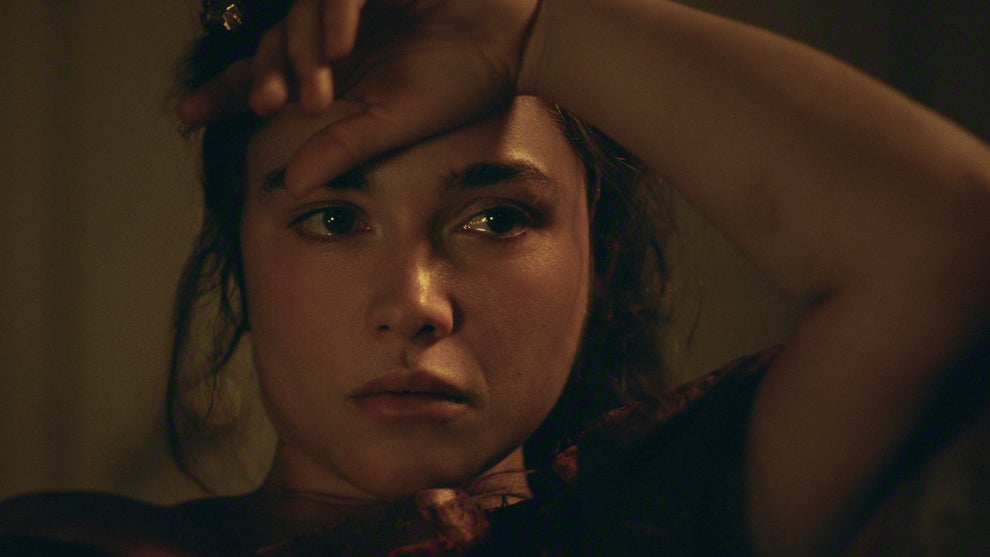
“I never would have wanted to make a film of this.”
In the foreword for author John Steinbeck‘s seminal, towering 1952 novel “East of Eden,” the author dedicates the book to his longtime editor and publisher, Pascal Covici. In it, he describes “East of Eden” as a box. “Nearly everything is in it, and it is not full,” he writes. That proves to be an understatement over the 600+ pages that follow, in which Steinbeck crafts a multigenerational story about sin, free will, Manifest Destiny and America itself. It is a book big enough to contain plainly stated Biblical parallels in one hand, and personal, deeply intimate stories from its author’s own life in the other.
It has only been adapted for the screen twice before. Most recently in 1981 as an ABC miniseries starring Karen Allen, Jane Seymour, Hart Bochner and others. 26 years before that, James Dean starred in a 1955 adaptation that brings the book’s final part to life as a kind of coming-of-age story. That film was directed by Elia Kazan, the grandfather of Zoe Kazan, who created, wrote, executive produced and co-showran Netflix’s lush new, seven-part adaptation of “East of Eden.”
Kazan spent years thinking about adapting the novel before she got the chance. But she never once in all that time imagined doing it as a feature-length movie like her grandfather did.
“The size of the book was one of the things that I was curious about, and the intergenerational [aspect of it],” Kazan told TheWrap. “I was thinking about the mini-series for ‘Roots,’ because there are certain stories you can only tell over time, and this felt like one of them to me.”
“One of the things that I love about the book that we also tried to bring into the series is that the book is kind of dialectical. It’s thesis, antithesis, synthesis over and over again, and there are all these disparate parts, even more so than our series,” Kazan explained. “It felt like, ‘Okay, here’s this invitation to make a series that is both cohesive and different in all of its parts. It’s both really epic and really personal, really intimate.’ The whole of it was the thing that I was wrestling with.”
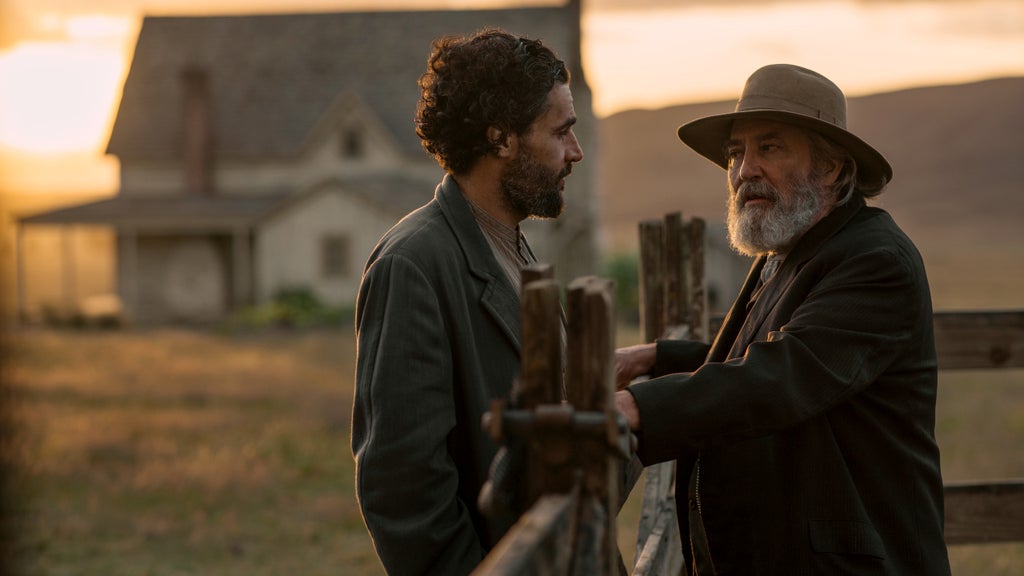
To summarize “East of Eden” in just a few sentences is a foolish endeavor, but here is an attempt.
Set at the turn of the 20th century, the book follows the Trask family. First, the wealthy Adam (played here by “Wolf Man” star Christopher Abbott) and his half-brother Charles (“Challengers” star Mike Faist, later Adam’s twin sons, Cal and Aron (newcomers Joseph Zada and Joe Anders), named after Cain and Abel from the Bible. Over the course of several decades, Adam, Charles, Cal and Aron must all contend with the cycles of violence and cruelty that have shaped their family and determine for themselves whether they are capable of breaking them.
Kazan fell in love with the book when she read it as a teenager. In the years that followed, she said that the novel “dogged her,” demanding that she revisit it. But it was only after she gave birth to her first child eight years ago that she had the “watershed moment” that led to her new, seven-hour adaptation of the novel.
“I realized, ‘Okay, from now on, or at least for the next two decades, every time I want to work, every time I want to write, I’m going to have to pay someone else to watch my child. What is worth my time? What is worth being away from my kid, and what is worth paying someone to be with my kid?’” Kazan recalled. “It really changed the standards that I had for myself for what I did. I wrote to my agent kind of shamefacedly, and was like, ‘God, this is so embarrassing. But if the rights to ‘East of Eden’ ever come up will you put my name forward as a writer? I think I know what I’d want to do with it.’ That was a result of having carried this book with me all of these years. It wouldn’t leave me alone.”
“It seemed different to me every time I reread it, which I think is a good sign,” she said. “The 1955 film adapts such a small part of the book and is such a loose adaptation, it felt to me like I wasn’t actually stepping on my grandfather’s toes. I think different material would have felt really different to me.”

50 Most Anticipated TV Shows of Fall 2026
Producing a more faithful version of Steinbeck’s novel was never going to be an easy feat. The book’s multigenerational scope, as well as its early 20th-century setting, demanded it be the kind of expensive, ambitious period drama the likes of which we rarely see in Hollywood nowadays. It meant reclaiming the same willingness to tackle a Great American Novel that the industry once had in spades.
“It’s a period piece. That comes into favor and goes out of favor,” co-showrunner Jeb Stuart, whom Kazan joked she was set up on a “blind date” with by Netflix, told TheWrap of the limited series’ ambitious demands. “It’s daunting. What if the audience doesn’t like something that took place 100 years ago? That’s a challenge, unless you put a modern spin on it, and our ‘East of Eden’ didn’t put a modern spin on it at all. I think it’s a testament to all the contributors of the show that it feels fresh without feeling like it’s become something different.”
Kazan was quick to credit Netflix for embracing her vision for the show, regardless of its costs. “From the time that Netflix stepped onto this with us, they wanted to make what we wanted to make,” she said. “There were notes that were complicated to put into place, and we had to learn each other. They had to come to trust me, I had to come to trust them, but never did I feel like they didn’t want to make exactly what I wanted to make, and that felt like the most enormous gift.”
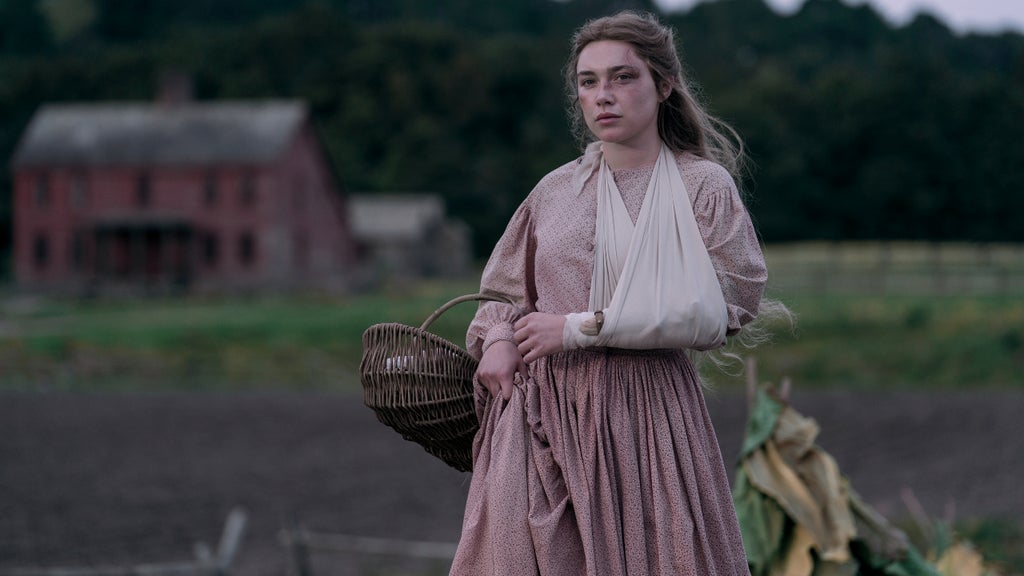
Steinbeck’s book is one that sinks its hooks in you, which refuses to be simplified or easily analyzed. The same is true of all of its characters, and perhaps none more than Cathy Ames, the wife of Adam and one of the most villainous, beguiling and fascinating characters in all of American fiction.
She is played by Jo Van Fleet in the 1955 adaptation, and her minutes onscreen in that film total fewer than 20. In Kazan’s Netflix reimagining, Cathy is played by Florence Pugh and she is as much the focus of the mini-series as any of its other characters. As portrayed by Pugh, Cathy is a simmering force of pure, often destructive will, frequently cruel and unrelentingly single-minded. For Kazan, Pugh was the obvious choice to play the role, which is why she sent her the scripts for the limited series’ first two episodes before she had even taken them to Netflix.
“What’s funny is that Florence talks about it like it gave her confidence to have me bring this to her. I felt the same way,” Kazan said. “I loved her work so much, and her saying yes to this made me believe that we could make the version that I wanted to make. It was really important to me to honor all of Cathy’s contradictions and complexity, and to have a partner as an actor who was going to be as empathic as I was towards her — without softening anything about her.”

Despite what some reactionary online critics would have you believe, Kazan’s “East of Eden” does the exact opposite of “softening” Cathy Ames. It does not justify Cathy’s actions or try to redefine her as a sympathetic girlboss figure. It gives Cathy the space to be as she is in the pages of Steinbeck’s novel, which first introduces her as a “monster” and then questions its own judgment of her 100 pages later. The result is a screen character whose sheer power, whose intensity of will, evokes towering movie figures like Daniel Day-Lewis’ unbending “There Will Be Blood” oilman, Daniel Plainview.
“They’re characters whose singularity of vision about themselves and the world almost supersedes any conception of good and evil. They are remaking the world in their own image,” Kazan said, when presented with the comparison. “Cathy is a force of nature. Whatever you think of her, she doesn’t let go of you. My curiosity about her was the thing that was always guiding me more than my judgment. I always wanted more.”
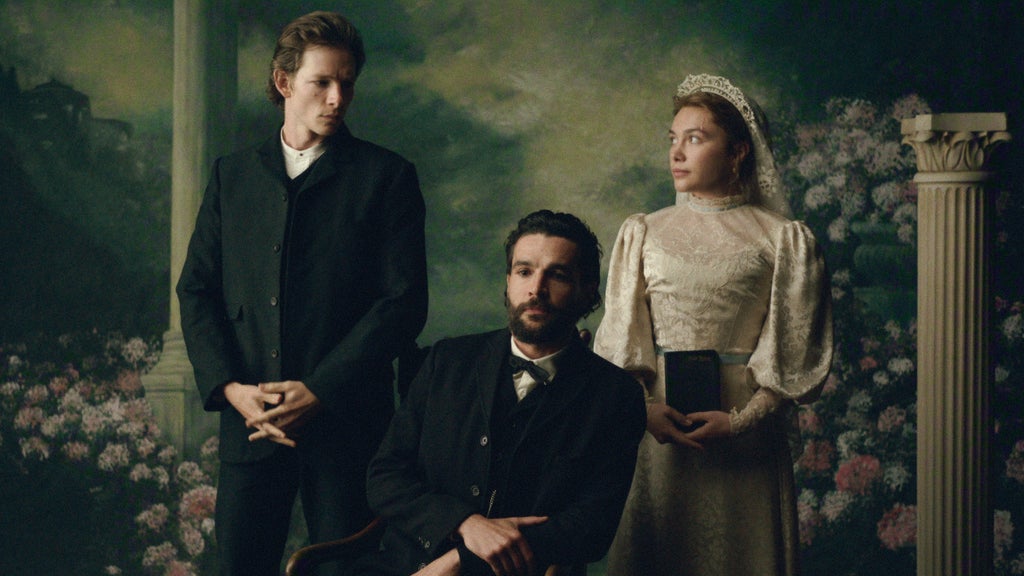
For guidance, Kazan looked to letters Steinbeck wrote to his editor while he was writing “East of Eden,” and in which not only does his opinion of Cathy seem to change but his curiosity about her also grows. Kazan describes the character as “private,” to the story’s other figures, its readers and even Steinbeck himself.
For Pugh, finding her way into the character involved keying in on specific, small moments. Speaking with TheWrap, she pointed to a scene in the series’ fourth episode in which Cathy comforts a fellow brothel worker after she has been abused by a client.
“Cathy gives over a piece of her soul. It’s tiny,” Pugh explained. “The way that Cathy operates is she’s always telling truths that sound like lies and lies that sound like truth, so that people never really know what’s truth and what’s a lie. But in this moment, she gives over a really, really big piece of information, but it is also so small.” The actress described the scene as “so crucial” to her understanding of the character.
“She feels so alone. She’s someone that works alone and is always trying to find her next breathing spot. That’s how I kind of imagine her,” the Oscar nominee said. “She’s working through things constantly. She’s assessing things, assessing who she can use to get to safety. Watching her stew on things and do her mental mathematics is all a part of that underlying brooding, unnerving feeling [you get] while watching her because you don’t know what she’s sussing out, ultimately.”

Getting Pugh’s lightning rod of a character right meant taking the time to let her actions develop, breathe and speak for themselves. It meant taking the time to honor her role in the shaping of the Trask family, and that required making painful cuts to Steinbeck’s novel.
“There were really difficult things to let go of,” Kazan said of her adaptation process, specifically calling out the extended storylines involving the Hamilton family in Steinbeck’s book. Those cuts were all part of the wrestling match Kazan had with her source material’s daunting scope, which began during the writing process and extended to the editorial stage.
“Every part of this, every episode, has its own pace and its own genre even, and making it feel like one big story while also letting each of those pieces be its own piece was the difficult thing,” Kazan said. “Figuring out, ‘When do we have to put our foot on the gas? When can we take it off?’ That was something we were actually figuring out at every stage of this, in writing and development, in pre-production, production and then in post-production. There were some of these episodes where we submitted 15 cuts to Netflix. That was not because we were failing to find it. It’s because it was such a complex puzzle.”
“Every time we cut the next episode, we had to go back and recut. Every time I was writing the next episode, I had to go back and rewrite,” the showrunner explained. “It’s all knit together.”
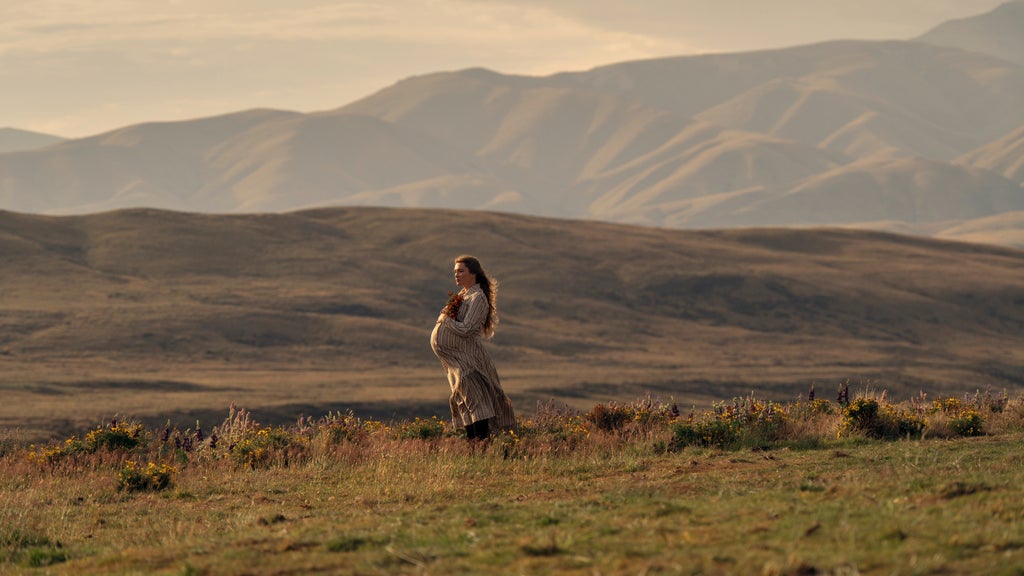
At the end of all of Kazan and co.’s hard work is a series that feels as true to Steinbeck’s novel as any show or movie could ever possibly come. The Netflix series honors not only Pugh’s Cathy, but also every member of the Trask family, their neighbors and the unerringly wise, scene-stealing Trask family servant Lee (Hoon Lee). And yet, even after having wrangled Steinbeck’s greatest novel into as manageable a shape as possible, Kazan still has questions about “East of Eden.”
During our conversation, I asked the showrunner about a pivotal decision Pugh’s Cathy makes in the final episode of “East of Eden” involving her son Aron. It is a moment lifted directly from Steinbeck’s novel, one that Kazan and Stuart considered changing before choosing to leave as it is on the page.
I asked her why she believes Cathy does what she does in this specific moment. Kazan reacted with a smile and small shrug. “I also ask that question, and I don’t know,” she admitted. “That is a mystery to me, and I love that about it. It’s not just one thing.”
The hooks, it seems, are still in.
“East of Eden” is streaming now on Netflix.
