
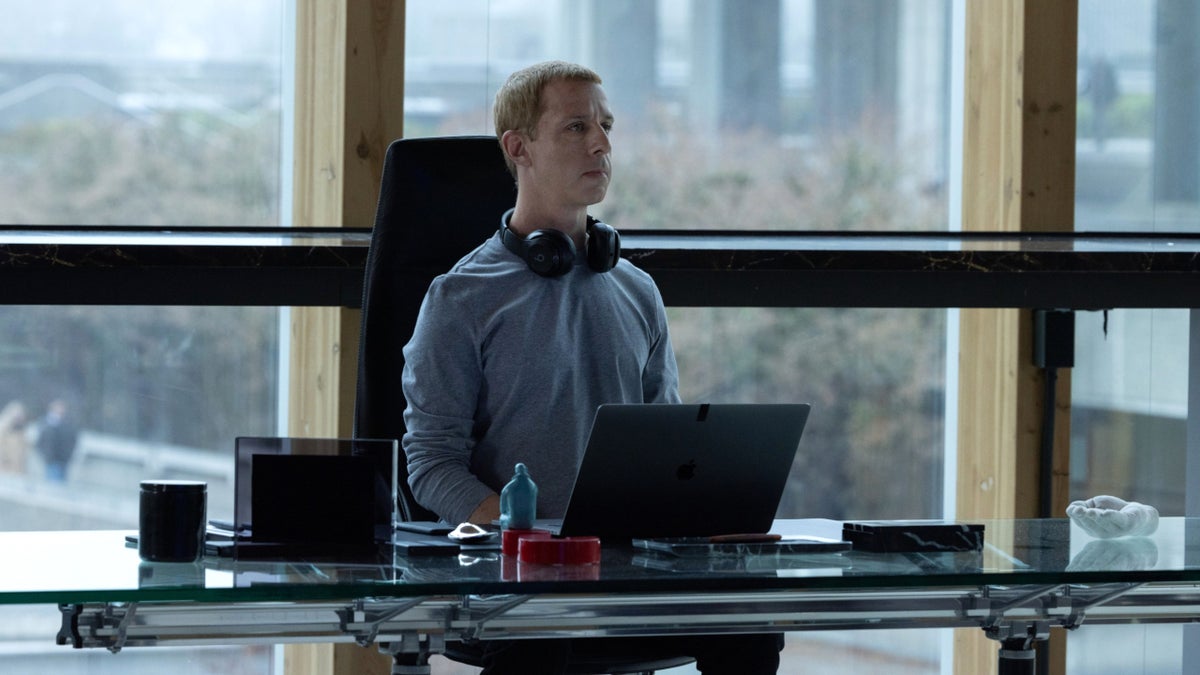
Sixteen years ago, at the height of Facebook’s dominance over the internet, Aaron Sorkin wrote a movie called “The Social Network” that became both a box office and a critical hit. Peter Travers called it “generation-defining” and sparked a debate. Its trailers were parodied on YouTube. It made $225 million at the box office and won Sorkin an Oscar for Best Adapted Screenplay.
But his companion to that Obama-era classic, “The Social Reckoning,” was DOA this weekend. With a $5.5 million domestic opening, it has earned a quarter of the $22.6 million that “The Social Network” earned. Its trailers have gone largely ignored on TikTok and Instagram, the sites that have eclipsed Facebook in terms of youth relevance, and reception has been lukewarm at best, with a B- on CinemaScore and Rotten Tomatoes scores of 55% critics and 73% audience.
“The Social Reckoning” marks the latest example of audiences rejecting a film that tackles tough issues that are already monopolizing real-life headlines. Just as last week’s “Digger” is a punishing satire that focuses on the bleak potential future brought by climate change and art’s insufficiency to tackle it, “The Social Reckoning” focuses on the deleterious effects of social media on democracy and the psyches of teenagers, both issues that have been in the news as recently as this past month, when Facebook’s parent company Meta reached a $17 billion settlement in a multi-state lawsuit regarding social media addiction.
In terms of financial misfires, “The Social Reckoning” is nowhere near the abject disaster that Warner Bros.’ “Digger” has turned out to be, with estimates on that bomb’s loss reaching as high as $250 million.
“Social Reckoning” is a co-production with Alcon that cost a reported $30 million, and with Sony enjoying a hot streak thanks to the historic $2.5 billion run of “Spider-Man: Brand New Day” and “Resident Evil” on pace to clear $425 million worldwide after its $40 million opening in China this weekend, the studio will be able to easily shrug off this mild flop.

With horror offerings like “Resident Evil” and fellow new release “Other Mommy” in theaters this weekend – and more to come later this month with Warner Bros./DC’s “Clayface” – the prospect of supernatural frights will always be more tantalizing for the majority of moviegoers than films about the frights of real life.
“It’s almost an exact replica of last week with ‘Verity’ and ‘Digger’ where the cinematic equivalent of fast food is outperforming the cinematic equivalent of fine dining,” said Rentrak analyst Paul Dergarabedian.
Lack of humanity
A deeper look at “The Social Reckoning” shows that it lacked any of the dramatic hooks that made “The Social Network” so intriguing to mature audiences and such a magnet for parodies back in 2010.
Take a look back at some of the crackerjack trailers that were cut for “The Social Network,” including a teaser where lines from the film are typed out as Facebook status updates and the famous trailer that used Scala & Kolacny Brothers’ cover of Radiohead’s “Creep” (director David Fincher famously had a heavy hand in the film’s marketing).
In those trailers, “The Social Network” promised a look inside the proto-tech-bro culture that gave rise to what was at the time the world’s most popular website and the lawsuits that spawned around its founding. But more than that, it hinged on a personal conflict with Jesse Eisenberg and Andrew Garfield as Mark Zuckerberg and Eduardo Saverin, best friends and Harvard roommates whose friendship would be destroyed by their world-changing creation.
The dissolution of that friendship led to some of the most famous lines Sorkin has ever written, and Sony Pictures used them as the core of the film’s trailers:
“A million dollars isn’t cool. You know what’s cool? A billion dollars.”
“Your best friend is suing you for $600 million.”
“You better lawyer up, because I am coming back for everything.”
The film also came out at a time when there was a mystique and luster around tech wunderkinds like Zuckerberg that “The Social Network” promised to pierce. Wrapping it in a personal story about Zuck’s original sin in founding his billion-dollar company gave it an irresistible hook for audiences. At the time, Facebook itself was still considered a force for good in society.
“‘The Social Network’ was a story of betrayal. It had Justin Timberlake in it. There were spoonfuls of sugar that helped the medicine go down, while ‘Social Reckoning’ is more of a document for our time,” said Dergarabedian. “I also think that there was more of an emotional connection to Facebook at the time because it was a new site, whereas now it feels more like a utility and not at all exciting, like turning on your coffeepot in the morning.”
Definitely not a sequel
Sorkin asked the media to refer to “The Social Reckoning” as a “companion” to “The Social Network” rather than a sequel, and while Sony’s marketing might have suggested otherwise with posters that alluded to the 2010 film, it becomes clear upon viewing the film why that request was made.
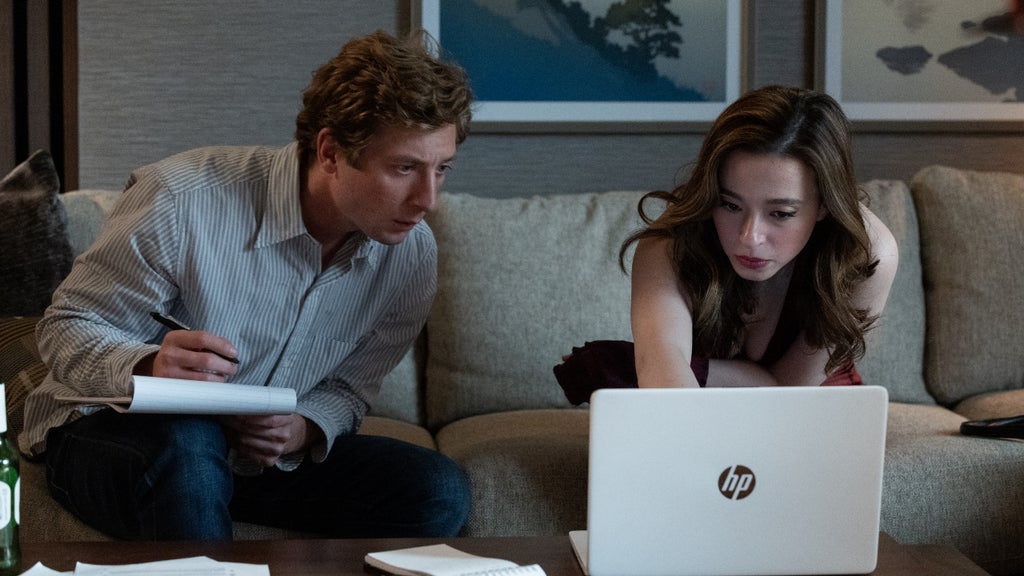
In “The Social Reckoning,” Zuckerberg, now played by Jeremy Strong, is a supporting character in the film. While a good portion of the movie is devoted to the CEO’s denial of the negative effects of Facebook’s failure to handle misinformation and his shocked response to the Jan. 6 Capitol riots, the core of the movie is focused on Frances Haugen, the data engineer at Facebook played by Mikey Madison, who risks her career by leaking secret files from Meta to Wall Street Journal reporter Jeff Horwitz, played by Jeremy Allen White.
In other words, the core of “The Social Reckoning” is a legal thriller exploring how a whistleblower is pushed to expose wrongdoing to the world. But Haugen’s relationship to her boss and to a reporter looking for a big story don’t have the same pull as a personal friendship.
With a more didactic screenplay that explicitly outlines how Facebook’s algorithm throws facts and mental well-being to the wind in the name of keeping users engaged, “The Social Reckoning” failed the “what have you got that’s new” test for moviegoers.
“The Social Reckoning” also found itself in that awkward place where it was both too soon and too late to tell this story. The Wall Street Journal investigations began in 2021, and nothing in the film will shock anyone even remotely familiar with the charges leveled at Facebook, with its recent settlement and a host of other related lawsuits still flooding the headlines this year.
At the same time, there isn’t enough distance from the controversy to allow people to rediscover it like audiences did with Robert Pattinson’s Chris Hansen in “Primetime,” a film that is two decades removed from the cultural zenith of “To Catch a Predator.”
Beyond the satisfaction of seeing Zuckerberg get skewered – the hollowness of which “Digger” aimed for – there wasn’t much to get people interested.
The Silicon Valley skewering continues
But there may be some films on the horizon that, at least on a lower budget and more limited release scale, could get audiences interested in tougher issues. Next weekend, A24’s cryptic and wildly acclaimed Noah Oppenheim documentary, “You Can See Everything,” hits theaters, and later this winter, Luca Guadagnino’s Sam Altman-ChatGPT-focused “Artificial,” which will be released by Neon after Amazon MGM dropped the film.
“You Can See Everything” is follows Elizabeth Holmes, the infamous creator of health technology startup Theranos, who went to prison in one of the most high-profile fraud cases of the past decade. With headlines, podcasts and a Hulu miniseries made about her, Holmes has been in the public consciousness as much as Zuckerberg. But “You Can See Everything” is passing the “what’s new” test with its premise: Holmes herself invited A24 to shoot a documentary in her house before she began her sentence, and “The Rehearsal” creator Nathan Fielder is the one who gets to ask her questions.
“You Can See Everything” has become one of the buzziest films of the year within Hollywood and among cinephiles, and its limited release could yield the highest per theater average of 2026. If that word-of-mouth spreads to the point that A24 is willing to try a wide release – there are no details on such an expansion yet – it could be a breakthrough for non-music documentaries, which have struggled outside of the Amazon MGM-boosted “Melania” earlier this year.
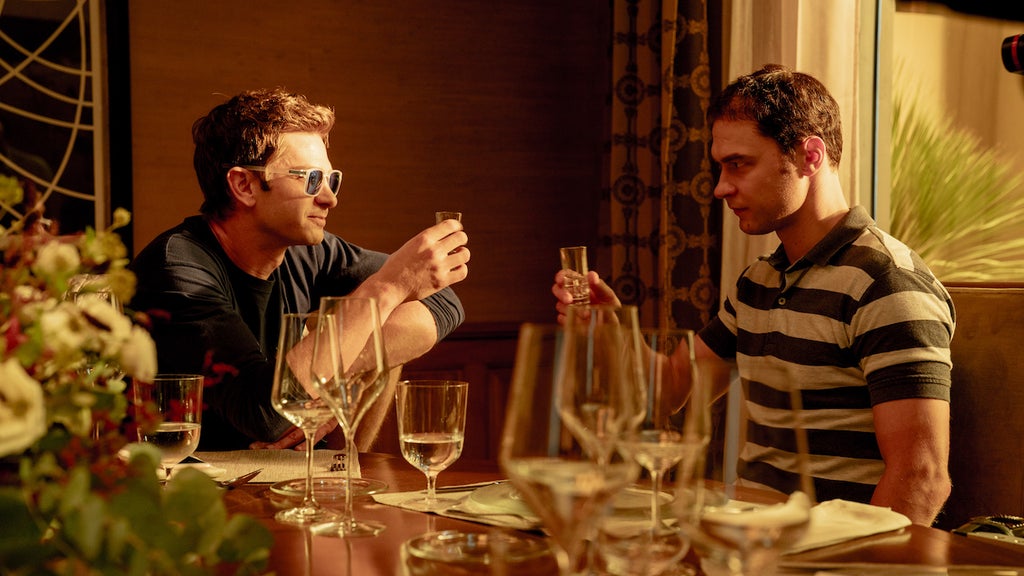
Meanwhile, “Artificial” has been hailed by critics as a film that feels closer in spirit to “The Social Network,” taking viewers inside the creation of an AI model that has the potential to end civilization. Like “You Can See Everything,” Neon is starting with a limited release on Christmas Day with a likely steady nationwide rollout in January 2027.
It remains to be seen if Andrew Garfield’s performance as OpenAI founder Altman – which has been hailed as awards-worthy for its creepiness – will be enough to sell a wide audience on a grim film about a new technology that, like Facebook, is all over the news for all the wrong reasons.
And with films like “Avengers: Doomsday” and “Dune: Part Three” well into their theatrical runs by the time “Artificial” goes wide, it wouldn’t be surprising if audiences opt for the fantastical apocalyptic scenarios over real-life existential threats.
