
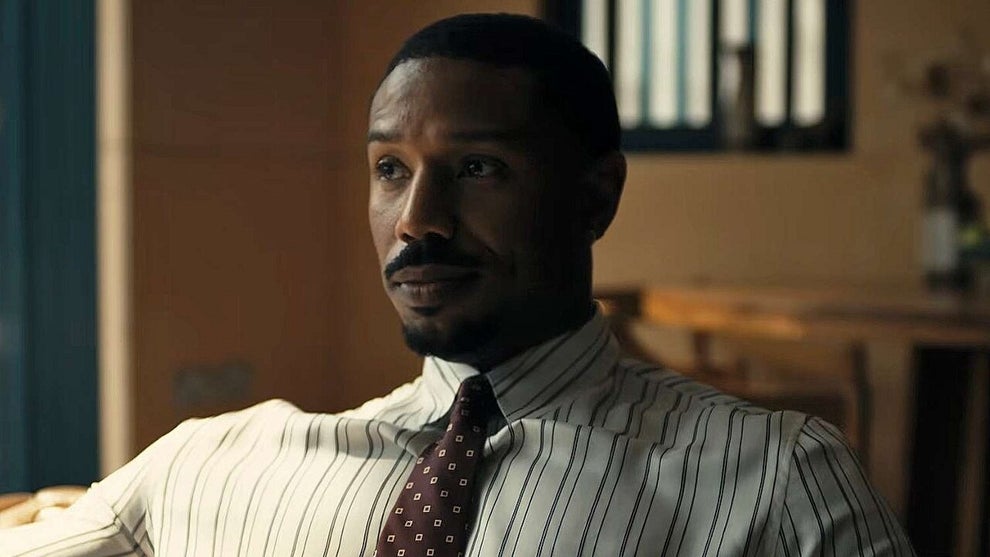
Michael B. Jordan’s “Thomas Crown Affair” may be a fresh take on the classic heist story, but its writing credits reach back to an earlier incarnation. TheWrap has learned that Kurt Wimmer and Leslie Dixon, who wrote the 1999 remake, will receive screenplay credit alongside Drew Pearce.
The new film, starring and directed by Jordan, is set to hit theaters March 5, 2027, courtesy of Amazon MGM Studios.
The story first hit the screen in 1968, starring Steve McQueen and Faye Dunaway. The 1999 remake swapped in Pierce Brosnan and Rene Russo, with Wimmer and Dixon handling the screenplay. Alan Trustman, who wrote the original film, will receive a “story by” credit on the new version alongside Matthew Michael Carnahan, who wrote an earlier draft.
What makes this credit so strange – bordering on unprecedented – is the fact that Dixon and Wimmer had nothing to do with this reimagined version. But the Writers Guild of America still awarded them screenplay credit. You would imagine that they would have received story by credit, alongside Trustman, but they are getting full screenplay credit, next to Pearce.
The credits will make their debut in a trailer and poster for 2027’s “Thomas Crown Affair,” set to be released later this week.

There are occasionally instances of the original writer being credited on remakes even if they had nothing to do with the newer version – while John Hughes wrote the script for 1997’s “Flubber,” he shared the credit with original “Absent-Minded Professor” writer Bill Walsh, even though he died in 1975. (The original movie was based on the story “A Situation of Gravity” by Samuel Taylor, who died the same year “Flubber” was released.) The 2006 “Omen” remake was written by Dan McDermott, but the WGA later denied him writing credit because the script was so similar to David Seltzer’s script for the 1976 movie. Seltzer received sole credit even though he was not involved with the movie at all. And Richard Linklater’s 2005 remake of “The Bad News Bears,” ostensibly written by Glenn Ficarra and John Requa, also credits original screenwriter Bill Lancaster, who died in 1997. Joseph Stefano also received a screenplay credit on Gus Van Sant’s 1998 remake of “Psycho,” mostly because the film being a largely shot-for-shot recreation of Alfred Hitchcock’s original. (He even discussed the new version publicly ahead of its release.)
It’s possible Wimmer and Dixon are receiving screenplay credit because their version of “The Thomas Crown Affair” shifted the titular antihero, a playboy with a lust for danger, from a bank robber in the 1968 film to an art thief in the 1999 remake. Based on the marketing materials for the new “Thomas Crown Affair,” Crown (Jordan) is stealing artwork again. It remains unclear what other elements of the 1999 film made their way into the new version, or what specific similarities informed the screenplay-credit decision. Trustman, who wrote the original 1968 film, is also receiving a “story by” credit, while Carnahan, who wrote an earlier draft of the new film, is being credited as well.
The implications could be significant for screenwriters going forward, particularly if this new “Thomas Crown Affair” becomes an example of writers receiving screenplay credit despite having no involvement in the modernized version. Jason Hall, a screenwriter who was credited on the first poster and trailer for the new film, could lose his screenplay credit, leaving him with only an executive producer designation. He could even end up with a credit in the no-man’s land of “additional literary material,” which typically appears near the end of a film’s credits and carries fewer benefits than a formal screenplay credit.
“The Thomas Crown Affair,” which also stars Kenneth Branagh, Adria Arjona, Lily Gladstone, Danai Gurira and Pilou Asbæk, arrives in theaters March 5, 2027.
