
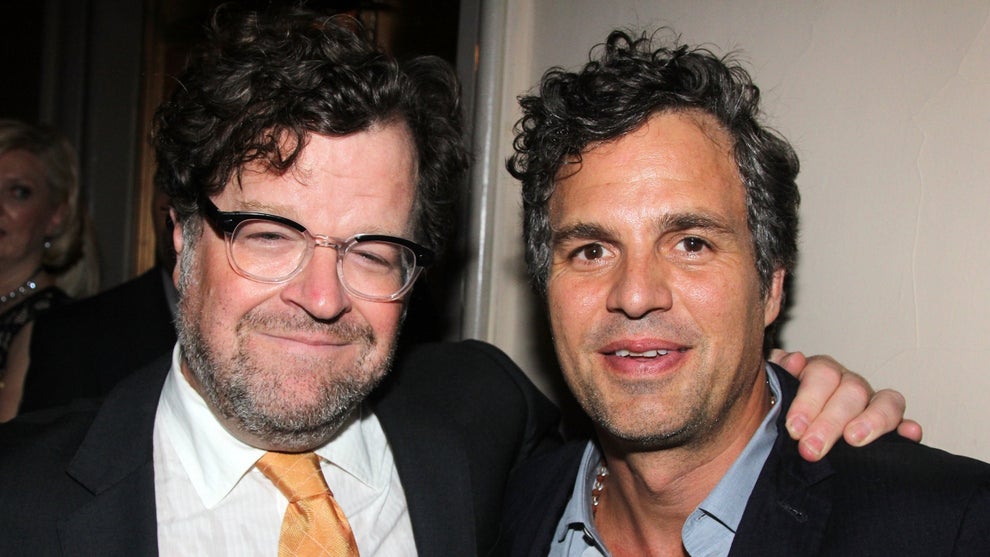
Kenneth Lonergan, the Oscar-winning filmmaker and playwright, defended Mark Ruffalo this weekend against accusations of antisemitism.
Lonergan wrote in a letter reviewed by TheWrap and first sent to The Hollywood Reporter that “the notion that he is antisemitic is overtly preposterous and the accusation itself a cynical and disgusting lie.”
“I have no problem with anybody who wants to contest Mark’s — or anyone’s — ideas,” Lonergan wrote in the letter, dated Friday, Aug. 28. “But like all such deflections, the tissue-paper accusations levied at him by his targets lead directly back to the soft places in their own positions, which they can’t or won’t defend by actually addressing what he has to say. It’s an old trick, and a sorry one.”
The controversy stemmed from an Aug. 21 Instagram post in which Ruffalo connected the potential Paramount/Warner Bros. Discovery merger with Israel’s ongoing war in Gaza. Paramount CEO David Ellison is the son of Larry Ellison, the head of Oracle, which has supplied the Israeli effort with military technology, according to executive vice chair Safra Catz.
Ruffalo, in his post, referred to the conflict as a “genocide” (an assessment held by many human rights organizations around the world) and one that was “built on an apartheid system of oppression powered by Oracle.” Ruffalo cited Catz, who at the Israeli-American Council National Summit in 2024 flexed the “profoundly scary technologies” that Oracle had created to be utilized by Israel in the conflict.
Paramount fired back at Ruffalo the same day that his post went up, saying in an exclusive statement to TheWrap that his comments were “a bridge too far” and labeling his rhetoric as “antisemitic.”
“We are, as always, troubled when antisemitic tropes are invoked in purported service of a business dispute. Words like ‘genocide’ and ‘apartheid,’ applied to a corporate transaction, aren’t just wrong — they’re a bridge too far, and they cheapen the very real suffering those words are meant to describe. This doesn’t deserve a response in kind — and to be clear, we don’t tolerate prejudice of any kind, against anyone,” a Paramount spokesperson said.
After Paramount’s comments, several other groups, including The Simon Wiesenthal Center and the Creative Community for Peace, similarly condemned Ruffalo’s comments. An industry group, known as The Brigade, which includes producers like Haim Saban, Lawrence Bender and Ram Bergman, also released a statement against Ruffalo’s remarks. Several high-profile supporters also came to Ruffalo’s defense, including “Hacks” actress Hannah Einbinder and Jane Fonda.
What makes Lonergan’s statement noteworthy apart from figures like Fonda and Einbinder is that he largely disagrees with Ruffalo’s stance on the Middle East.
“While I hope I share Mark’s basic humanitarianism, and likewise deplore the conduct of the war as I understand it, I disagree profoundly with many of his positions on the Middle East, Israel, Gaza and Iran’s constellation of fanatical Islamic fundamentalist proxies,” he wrote. “I think we share an equally dim view of fanatical Messianic Zionist fundamentalism.”
But labeling Ruffalo antisemitic is beyond the plane, he noted. “Mark Ruffalo has been talking about Israel since long before the Gaza war. Apart from some routine social media ping-ponging, nobody serious I know of had accused him of antisemitism. Now Paramount has done just that, in the face of his sustained attacks on David Ellison and the upcoming Paramount merger.”
Lonergan specifically called on the Simon Wiesenthal Center to reexamine Ruffalo’s comments and reconsider their own response. “I wish the Simon Wiesenthal Center, at least, would review his remarks and their own responses, and clarify where exactly they detect any antisemitism,” he wrote.

Paramount responded to Lonergan’s letter in another statement to TheWrap on Monday, clarifying that the “profoundly scary technologies” Oracle employed in Gaza were to rescue Israeli hostages from Hamas.
“A spokesperson for Safra Catz said that the technology she referenced in the edited video (reposted by Ruffalo) ‘was in fact intended for use in rescuing hostages abducted during the Oct. 7, 2023, Hamas terror attack,’” a spokesperson for Paramount said.
Representatives for Lonergan and Ruffalo did not immediately respond to TheWrap’s request for comment.
THR was first to cover Lonergan’s letter. Read it in full, below:
Mark Ruffalo has been talking about Israel since long before the Gaza war. Apart from some routine social media ping-ponging, nobody serious I know of had accused him of antisemitism. Now Paramount has done just that, in the face of his sustained attacks on David Ellison and the upcoming Paramount merger.
While I hope I share Mark’s basic humanitarianism, and likewise deplore the conduct of the war as I understand it, I disagree profoundly with many of his positions on the Middle East, Israel, Gaza and Iran’s constellation of fanatical Islamic fundamentalist proxies. I think we share an equally dim view of fanatical Messianic Zionist fundamentalism.
But Mark has been a dear friend for 30 years. The notion that he is antisemitic is overtly preposterous, and the accusation itself a cynical and disgusting lie. I wish the Simon Wiesenthal Center, at least, would review his remarks and their own response, and clarify where exactly they detect any antisemitism.
A similar indictment of Mark for his latest social media screed — a screed, mind you, as it was characterized this week by K.J. Yossman of Variety — comes from Ari Intel and the Creative Community for Peace. It is likewise evidence-free, scurrilous and shameful. Shame on its authors and signers — especially those few signatories who know Mark, have worked closely with him and know better.
I have no problem with anybody who wants to contest Mark’s — or anyone’s — ideas. But like all such deflections, the tissue-paper accusations levied at him by his targets lead directly back to the soft places in their own positions, which they can’t or won’t defend by actually addressing what he has to say. It’s an old trick, and a sorry one.
I would mention my own ethnic credentials, if only to establish my right or lack thereof to be commenting on these matters at all. But it offends me to do it. So if anybody cares, they can look it up.
