
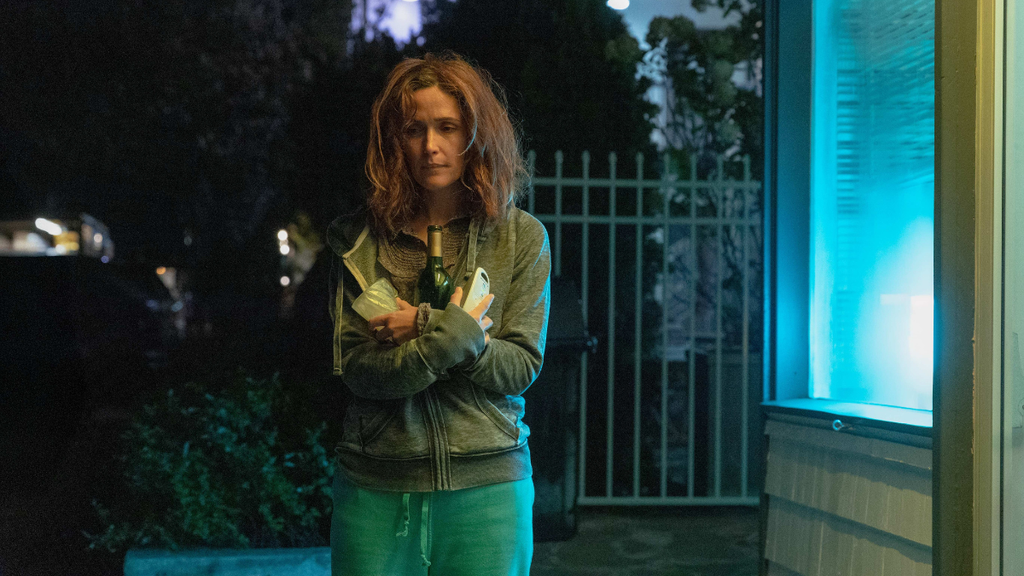
About 35 minutes into “If I Had Legs I’d Kick You,” an indie written and directed by Mary Bronstein, Rose Byrne’s Linda stretches out on her couch, stoned, and starts watching a schlocky horror movie in which suburban housewives feast on children. Linda asks Siri to identify the film (“What is movie…babies…zombies…’80s…mothers eating babies?”) and gets a chipper answer about Lindy Chamberlain, the Australian woman falsely convicted of killing her baby who was famously played by Meryl Streep in 1988’s “A Cry in the Dark.”
“The tone is weird, and you’re uncomfortable, and you start laughing,” Byrne said, breaking into laughter herself. “It’s all these layers that Mary is putting in there. It could be heavy-handed, but it’s this incredible needle that she’s threading where you’re laughing, shocked and scared at the same time.”

Packed with meaning to the point of absurdity, the scene exemplifies the razor’s edge that “If I Had Legs” walks between drama, horror and comedy — and how expertly Byrne navigates all of it. The movie thrusts audiences into Linda’s waking nightmare: She’s caring for her special-needs daughter, who has a feeding tube; seeing patients in her psychotherapy practice; and trying to fix the gaping hole in her apartment’s ceiling. Isolated, frustrated and racked with guilt for feeling that way, she is constantly unraveling. In the aforementioned scene, she numbs herself with pot and a zombie-cannibal flick so terrible it must be a hallucination (it’s not: “Flesh-Eating Mothers,” 1988), then turns to AI for insight, only to be offered bullet points on a notorious case of a supposed mother-monster.
This is a woman who cannot catch a break.
“If I Had Legs” is an intense two hours that would be close to unbearable without Byrne, who deftly plays every beat, from the deadly serious to the darkly droll, often in extreme close-up. After the movie premiered at Sundance almost a year ago, Byrne won the Silver Bear at the Berlin Film Festival and was nominated for a Gotham Award for Outstanding Lead Performance. Critics have poured on superlatives to describe her work (“magnificent,” “Rose Byrne astounds,” “the performance of a lifetime”). Many reviews convey an “it’s about time” sentiment for the Australian actress who has been doing great work over the past 30 years in film, on TV and on the stage, primarily outside of the glitzy glow of the awards spotlight.
“It’s funny with reviews, because you just remember the bad ones, right? So it’s very surreal when it’s not the case — when people do like it,” Byrne said via Zoom from the New York City home she shares with her longtime partner, Bobby Cannavale, with whom she has two sons. “Mary has made an extraordinary film, and I believe in it so much. And that’s kind of been the driving experience of this. What I’ve hung on to is what she’s done — I just think it’s so singular and unique.”
There is a certain logic that Byrne’s accolades would come for a role that puts her versatility front and center. The actress, who was twice nominated for an Emmy for FX’s late-aughts legal thriller “Damages,” has anchored the four movies in the “Insidious” horror franchise, appeared as a CIA agent in two X-Men films and played Gloria Steinem in the 2020 limited series “Mrs. America,” all while amassing a robust resume as a gifted comedic actor: “Bridesmaids,” “Neighbors” 1 and 2, “Spy” and two Apple TV series, “Physical” and “Platonic.”
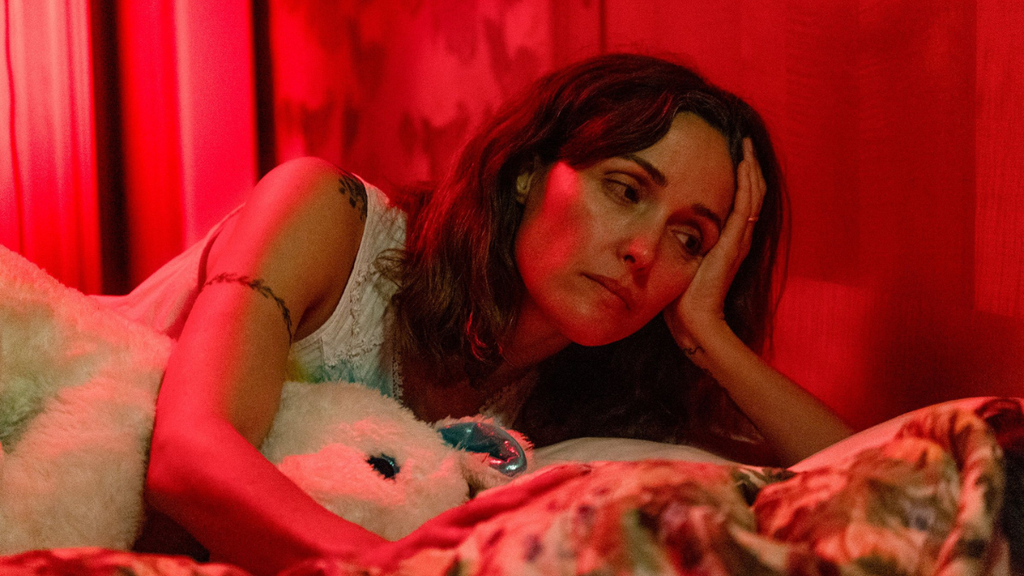
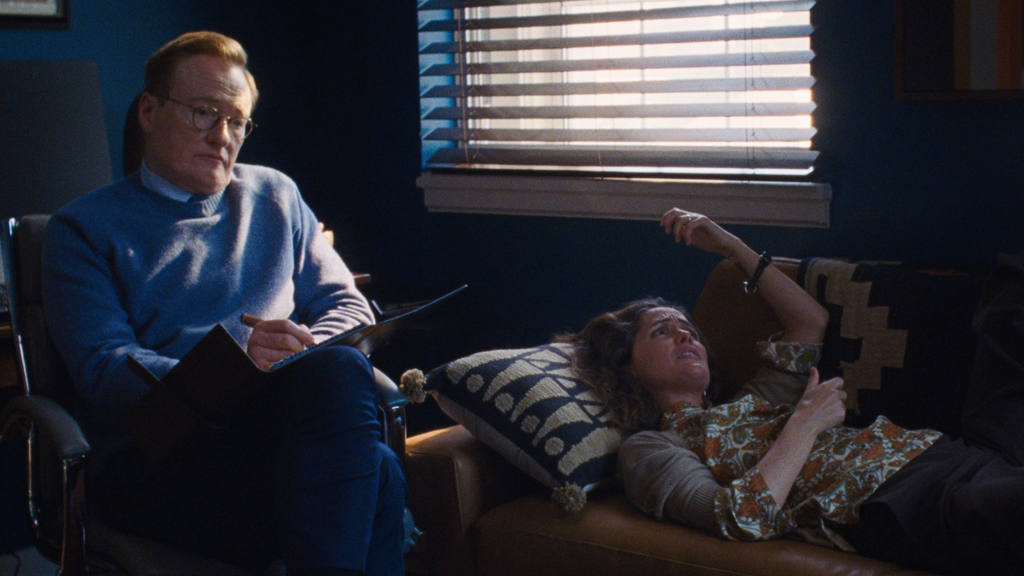
When Bronstein’s script first came Byrne’s way, she recognized it was a “mammoth undertaking” that would require all her acting tools: bringing to life a frenzied woman who makes questionable decisions, like leaving her daughter alone in their motel room and meeting with patients although she’s in no state to do so. Even her relationship with her own therapist, played with exacting hostility by Conan O’Brien, is a dead end. “If I looked too much at the big picture, I could just get flooded with being overwhelmed,” Byrne said. “So it was breaking it down to these more manageable bites.”
Over several weeks, she and Bronstein went through the script line by line, “developing our language, getting to know each other.” By the time production began on Long Island, Byrne knew that in her scenes with the daughter (Delaney Quinn), the child’s face would remain off-screen so that audiences could immerse themselves in Linda’s point of view. What she didn’t grasp until the camera was almost touching her eyelashes was just how much “If I Had Legs” would rely on closeups to tell the story. On the very first day, they shot the opening scene, where Linda is talking to her child’s doctor (played by Bronstein), feeling judged and holding back tears until she can’t anymore. The camera is pulled in so tight that we don’t even see her full face.
“Any first day is always nerve-racking, but I was so nervous and my adrenaline was so high, and the camera was getting closer and closer,” Byrne said. “It was the hardest scene of the film.” Watching the finished movie was its own process: “I felt quite staggeringly shocked. I stumbled out of the cinema. Self-consciously, I don’t love watching myself, but the vision [Mary] had was bigger than anything I was doing, so I could forget it’s me for a lot of it.”
“If I Had Legs” is one of a handful of recent movies that engage with complicated definitions of motherhood (2018’s “Tully,” 2021’s “The Lost Daughter,” last year’s “Nightbitch,” this year’s “Die, My Love”) and what happens to a woman’s identity when she becomes a mother. Unleashing a divisive character like Linda in the age of the Trad Wife and the Dobbs decision is a radical act unto itself, especially considering that this character speaks freely of her past abortion.
“She is polarizing. That’s what you’re being challenged with,” Byrne said. “It’s so interesting when provocative art comes out when there’s conservative government and conservative thought. That’s when the richest conversations start to happen. I feel like this is that moment, and I love being part of that collective consciousness.”
This story first ran in the Actors/Directors/Screenwriters issue of TheWrap’s awards magazine. Read more from the issue here.